

中国广东省东莞市凤岗镇玉湖路9号B栋8F
anja@flsrfidpro.com+852 46090773
在 24 小时内回复
ABS RFID Tag Series
ABS RFID Tag Series
ABS RFID Tag Series
ABS RFID Tag Series
+

ABS RFID Tag Series

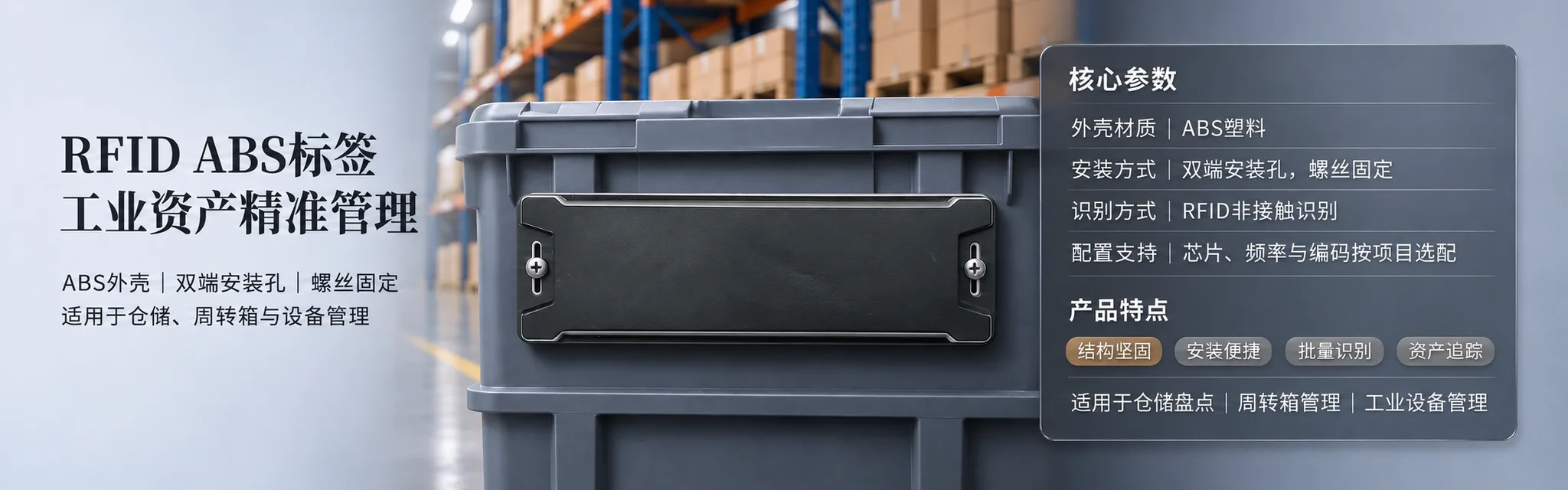
Rigid ABS UHF tag for industrial assets: Alien-H9 or Monza-m4qt chip, EPC Class 1 Gen 2, IP68 sealing and four fixing options — screw holes, adhesive backing, cable tie or recessed embed. Reads 20 m+ on metal with a handheld and 28 m+ with a fixed reader.

Category工业 RFID 标签
Views251
Total Sold511,189
SpecificationStandard screw-hole version, Alien-H9, black, laser serial / Adhesive-back version, Alien-H9, black, laser serial
Price联系询价
Download Specification
ItemSpecification备注
协议EPC Class 1 Gen 2; ISO 18000-6CGlobal UHF standard
Frequency905–928 MHz (CN & US)其他区域乐队可定制
ChipAlien-H9 or Monza-m4qt下单时选择
内存96 or 128-bit EPC; 512-bit user芯片相关
应用表面Metal surfaceAntenna matched for metal backing
Read range — handheld≥ 20 米(金属)1 W handheld, 2 W ERP, 0–3 dBi antenna
读取范围 — 固定≥ 28 米(金属)4 W fixed reader, 6–12 dBi antenna
尺寸130 × 42 × 10.5 毫米Two countersunk mounting holes
材质ABS engineering plasticSealed housing
颜色黑色其他颜色可定制
安装螺丝或胶粘Cable tie and recessed pocket also possible
Weight45 克—
防护等级IP68Dust-tight and immersion resistant
存储温度-40 至 100 °C—
工作温度-30 至 80 °CContinuous
Application temperature-40 至 100 °CShort excursions
标记Laser serial, QR or colour code编号范围,需另行申请

Mounting selection

FixingSurfaceTypical asset备注
Screw, two holesSteel, wood, rigid plasticRacks, pallets, machine framesFlush screw heads; survives washdown
背胶Clean flat painted metal or plasticTote walls, cabinets, tool boxesDegrease; apply above 10 °C
扎带或绑带Round pipe and tubular framesPipework, scaffolding, cage trolleysKeeps the inlay off the metal
Recessed pocket模制箱或工具箱Forklift pockets, returnable binsLeave 5 mm clearance behind the tag
Standard screw build混合工业Permanent asset register两个沉头孔
Adhesive buildNo-drill surfacesLeased or painted assetsOne-time fix

Factory inspection sheet

CheckPass criteria失败时操作
Read testReads at the agreed reader and power at both ends of the batchRe-test the batch; scrap failed units
SealingNo water ingress after immersion test删除批次
Housing and holesNo flash, no cracks, holes concentricReject the unit
尺寸Within ±0.3 mm of drawingReject the batch
标记Legible, correct serial range, no double marksRe-mark or scrap

Application scenarios

Plastic totes and pallets

Returnable totes move between production, storage and the dock, and the tag has to survive being stacked, dragged and washed. Screw or adhesive mounting keeps the body on the tote wall where the dock-door reader sees it, while the sealed housing shrugs off the wash bay.

Plastic totes stacked on warehouse racking

Logistics assets and racks

Steel racks and stillages are the worst case for a thin label and the easiest case for an ABS body. Bolt the tag to the outside of the upright, clear of the fork entry, and the tag keeps its read range instead of detuning against the steel.
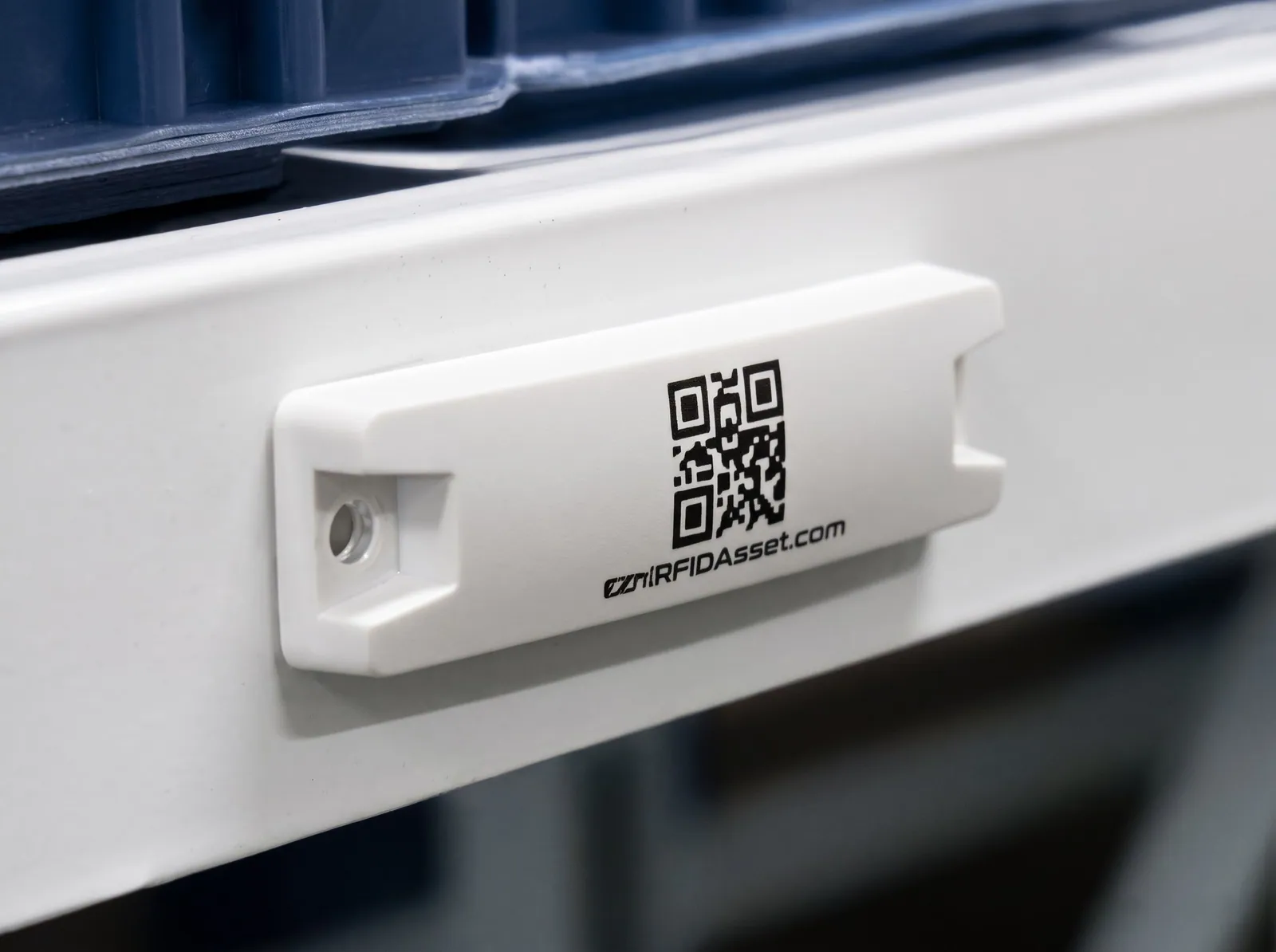
ABS tag screwed to the side of a returnable container

Equipment and tooling records

Machine frames, jigs and tooling boxes carry a tag for maintenance history and location. The flat face takes a laser-marked serial that stays legible after coolant, oil and cleaning fluid, so the physical number matches the database entry.
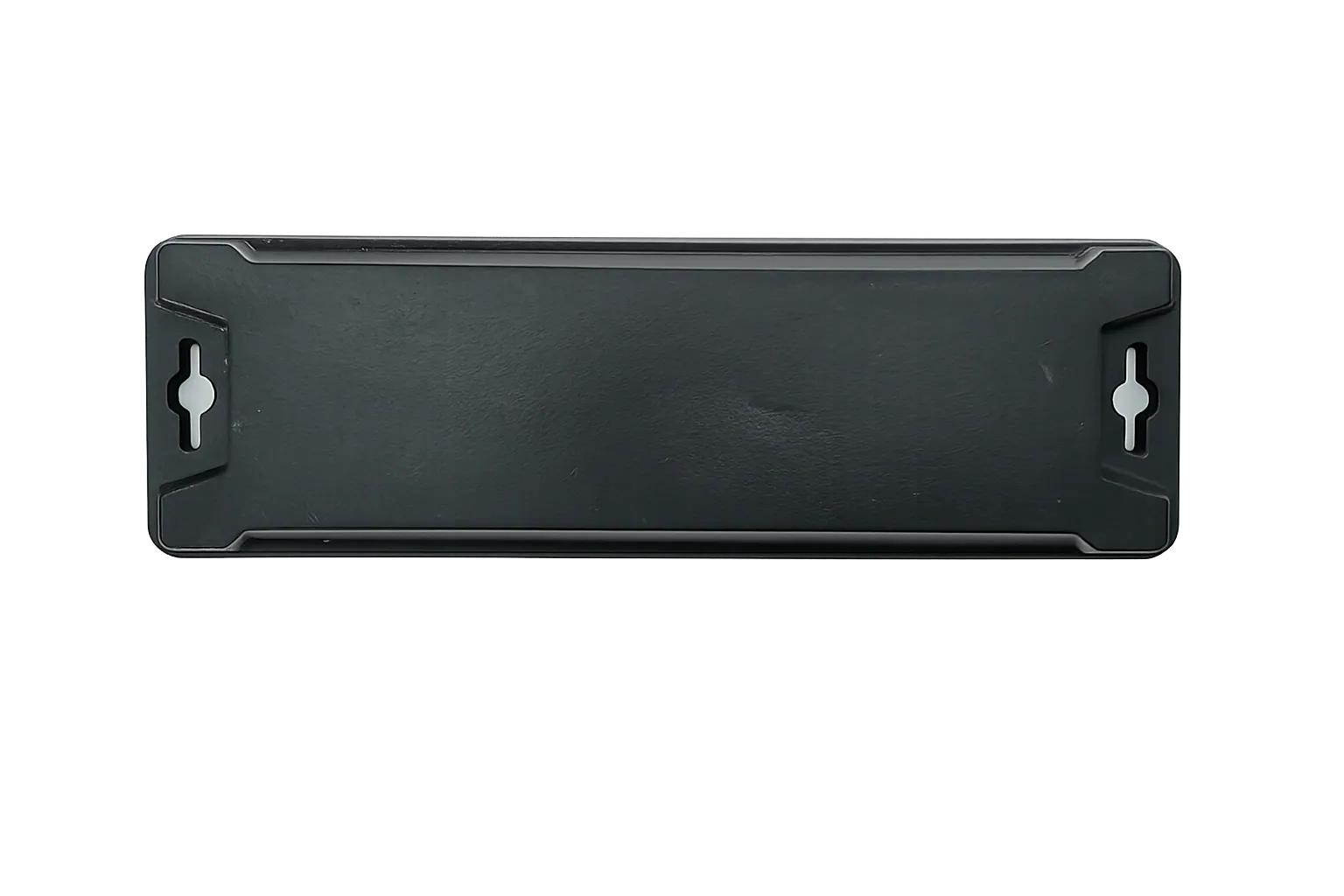
Black ABS RFID tag with mounting holes, studio view

A rigid tag for assets that get handled every day

Most RFID failures in a plant are not chip failures. They are housings that crack at the screw hole, labels that peel off a dusty tote, or a tag that reads on a steel rack and goes quiet on a plastic pallet. The ABS RFID Tag Series is the answer to that everyday wear: a sealed ABS body measuring 130 × 42 × 10.5 mm and weighing 45 g, built around an Alien-H9 or Monza-m4qt chip on EPC Class 1 Gen 2, with an IP68 rating so washdown and rain are not part of the conversation.

It is the tag to specify when the asset is rigid, the mounting surface is known, and the tag has to stay on for years rather than one season.

Stacks of blue plastic totes on warehouse racking

Four ways to fix the tag to an asset

The same body is screwed, taped or tied depending on what it goes onto. Choosing the fixing method first is what keeps the read rate stable after the first month.

Screw mounting

Two countersunk holes at the ends take a 3–4 mm self-tapping screw or a machine screw into a pre-tapped boss. This is the right choice for steel racks, machine frames, wooden pallets and returnable containers that are power-washed. The screw heads sit flush, so nothing catches on a conveyor or a fork pocket.

Adhesive backing

An acrylic foam tape is applied at the factory and protected by a release liner. Use it on clean, flat, non-porous surfaces — painted steel, aluminium extrusion, plastic tote walls — where drilling is not acceptable. Degrease the surface and apply above 10 °C.

扎带或绑带

For round or irregular objects the tag can be looped onto a cable tie or a stainless strap through the mounting hole. This holds the inlay away from the surface, which helps on pipework, scaffolding and cage trolleys.

Recessed embedding

Where the tag must not be hit at all — forklift pockets, moulded crates, tooling boxes — a pocket of about 132 × 44 × 11 mm holds the body flush. Leave 5 mm of clear plastic or foam behind the tag so the antenna is not detuned by the surface underneath.

  • Rigid and semi-rigid assets: screw or adhesive
  • Washed or steam-cleaned containers: screw, never adhesive
  • Round pipework and frames: cable tie, with the tag standing off the metal
  • Moulded crates and tooling: recessed pocket

ABS RFID tag fixed with screws to the side of a returnable container

What sits inside the housing

The inlay uses an Alien-H9 or Monza-m4qt chip with EPC Class 1 Gen 2 and ISO 18000-6C support, 96 or 128 bits of EPC memory and 512 bits of user memory. The antenna is matched for a metal backing, which is why the tag keeps its range when bolted to a steel stillage instead of falling back to a few centimetres.

The ABS shell is sealed rather than simply clipped together. That is the difference between an IP68 tag that survives a pressure wash and one that fills with water after the first wet shift. Operating range is -30 to 80 °C, with an application range of -40 to 100 °C for short excursions such as a drying tunnel.

Black ABS RFID tag body with two countersunk screw holes

Reading it in a real aisle

With a 1 W handheld at 2 W ERP and a 0–3 dBi antenna, the tag reads at 20 m or more on metal. On a fixed reader at 4 W with a 6–12 dBi antenna, the same tag reads at 28 m or more. Those figures assume the tag is on the outside of the asset and the reader is aimed at it; a tag buried in the middle of a stack of totes will read much shorter, whatever chip it carries.

Mount the tag at the height the reader actually sees — dock doors read around 1–2 m, forklift-mounted readers read at the fork carriage — and keep 100 mm clear on the reader side of the tag.

Choosing between the two builds

版本Fixing最佳用途
标准螺丝孔版本两个沉头孔Steel racks, pallets, crates and machine frames that stay on site
Adhesive-back versionAcrylic foam tapePainted metal, plastic walls and assets where drilling is not allowed

Both versions share the housing, chip and IP68 sealing; only the fixing changes. If the asset is re-painted or steam-cleaned, take the screw version — adhesive is a one-time fix.

Marking, packing and ordering

Laser marking on the flat face carries a serial, a QR code or a colour code for the asset class; the mark sits below the surface and does not rub off in a wash. Tags can ship in numbered ranges agreed at order, so receiving can match the delivery to the asset register without re-reading every tag.

Tell us the asset, the mounting surface and the reader, and we will confirm chip, fixing and marking before the order is released. Minimum order, lead time and sample schedule are quoted per project.

WhatsApp 聊天